Brentwood · Oakley · Antioch
Gutter Guard Installation in Brentwood, CA
Gutter guards promise fewer clogs, but they come with trade-offs. Here are the main types, what each one does well, the downsides sellers skip, and what to ask before you buy.
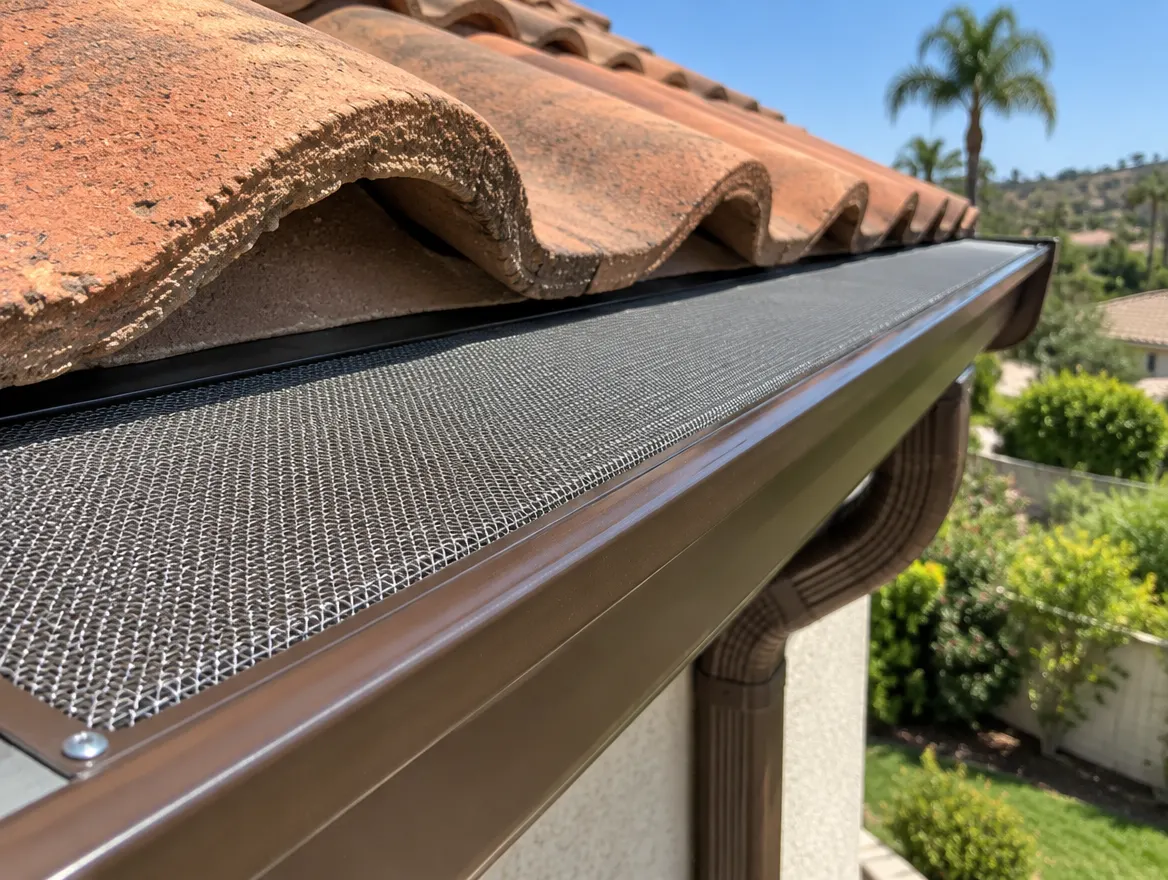
The five common types
Bob Vila groups guards into screen, micro-mesh, reverse-curve, brush and foam (Bob Vila). They differ in what they block and what they let through:
Screen guards
Metal or plastic screens that sit over the gutter. Inexpensive, but Angi notes metal mesh lets small debris through, plastic screens are fragile, and Bob Vila says screens can be dislodged by high winds or falling branches.
Micro-mesh
Fine mesh that blocks even small bits of debris. It may need occasional cleaning with a hose and brush, and costs more than a basic screen.
Reverse-curve (surface tension)
A curved cover that water follows into the gutter while larger debris falls off. Common on professional installs. Angi notes some small debris can still get in.
Foam and brush inserts
Low-cost inserts that sit inside the gutter. Bob Vila says heavy rain can saturate foam and cause overflow, and This Old House says foam needs more frequent cleaning and lasts about five years.
The honest downsides
- Gutters under guards still need periodic cleaning, and the tops of guards need clearing after storms (This Old House).
- Some guards overflowed in extreme simulated downpours in testing reported by This Old House.
- Installation that lifts roof shingles can affect roof warranties (Bob Vila).
- Pine needles and fine debris can get caught on or under some designs.
Gutters already clogged or leaking? Guards over a damaged gutter hide problems rather than fix them. See gutter repair first.
Questions to ask the installer
- Which guard type do you recommend for the trees around my house, and why?
- How is it attached, and does it touch or lift my roofing?
- Does the guard installation affect my roof warranty?
- What is the warranty on the guard and on the labor?
- What cleaning will I still need to do?
Want the full comparison? Gutter guards: pros and cons and the gutter guard cost guide.
Gutter guard questions
Do gutter guards really work?
They reduce how much debris gets into a gutter, but they are not maintenance-free. This Old House notes that leaves, pine needles and roof grit can collect on top of a guard and block water flow if not cleared, and Bob Vila recommends inspecting guards after big storms.
Can gutter guards void my roof warranty?
Some can. HomeGuide lists a possible roof-warranty issue as a downside, and Bob Vila says prying up the lower row of shingles to install slip-under guards can void certain roof warranties. Ask the installer and check your roofing warranty before you buy.
Which gutter guard type is best?
No single type is best for every home. Micro-mesh blocks the smallest debris but can need brushing; reverse-curve guards are common on professional installs; foam and brush types are cheap but need more cleaning. Match the type to the trees around your house.
How much do gutter guards cost?
Published figures run from about $0.50 per foot for plastic screen to $10 or more for reverse-curve in material alone, and from about $3,000 to $9,000 or more for professional installation on 200 linear feet. See the gutter guard cost page for each type.
East Contra Costa communities we cover
Requests come from homeowners across the eastern end of Contra Costa County, along Highway 4 and the Delta.
Request a gutter quote
Tell us about your home and what you need: new gutters, guards or a repair. A local gutter pro serving East Contra Costa follows up to measure and quote.
- Takes about a minute
- Quick, short form
- Ask for a written, itemized quote